

GalvStruct Metal Building Roof Styles
GalvStruct metal buildings are available with multiple roof styles to match different budgets, building sizes and performance needs. Compare Regular Roof, Boxed Eave and Vertical Roof designs to determine the best fit for your carport, garage, RV cover, equipment shelter or other structure.
Once your building size is determined, the next decision is selecting a roof style. There are typically three options available, depending on the size of the building: Regular, Boxed Eave (A-Frame Horizontal), and Vertical roof styles. Buildings longer than 35 feet are limited to the Vertical roof option only.
Each roof style offers its own benefits and cost considerations. Regular and Boxed Eave styles are generally similar in price, while the Vertical roof style represents the largest upgrade. Often referred to as the “best” roof option, the Vertical roof provides enhanced performance and durability, making it a popular choice for larger or long-term installations.


Vertical Roof Style (Best Option)
The Vertical Roof uses an A-frame design with steel panels installed vertically, allowing water, debris, and snow to shed efficiently from the ridge down to the eaves. This mirrors how steel panels are installed on residential and commercial buildings and provides the best long-term performance.
Vertical roofs include additional structural components, such as hat channel supports, vertical roof trim, ridge caps, and finished end trim, which add rigidity and durability to the building. Because the longest roof panel available is 35 feet, all buildings longer than 35 feet are required to use a vertical roof to avoid splicing panels. Horizontal roofs over this length are not covered by warranty.
Best for: longevity, drainage, large buildings, and premium performance.
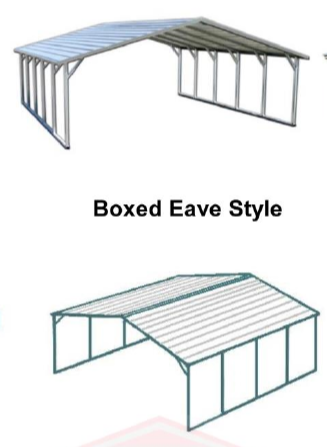
Boxed Eave Roof Style (Mid-Level Option)
The Boxed Eave (A-Frame Horizontal) roof also uses an A-frame design, but the steel panels are installed horizontally, running from front to back. The underside of the eaves is finished with boxed trim, giving the building a clean, residential appearance.
This style is more affordable than a vertical roof because it does not require the additional hat channel support system. However, because the roof panels run horizontally, water and debris do not shed as efficiently as with a vertical roof. As with other horizontal roof styles, buildings longer than 35 feet should be vertical to avoid panel splicing.
Best for: appearance, moderate budgets, and buildings under 35 feet.
