GalvStruct Metal Building Options & Upgrades
Customize your GalvStruct metal building with available doors, windows, insulation, gables, lean-tos, cupolas, wall configurations and other structural or appearance options. Available features vary by building size, design and installation requirements.
Doors
Doors
Roll-Up Garage Doors
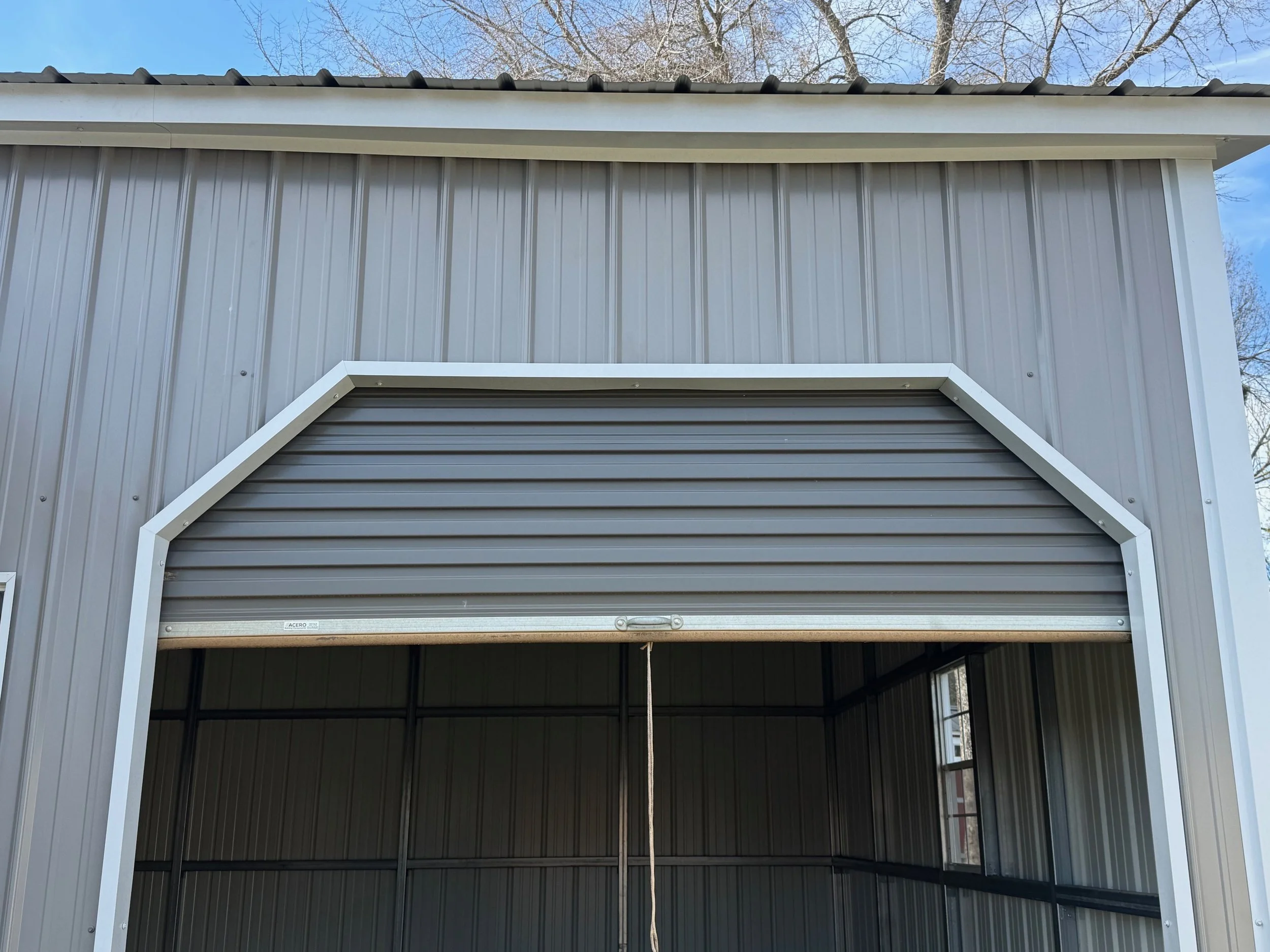
Roll-up garage doors are available options in sizes ranging from 6′ × 6′ to 16′ × 16′, with additional custom sizes available by special order. These doors are constructed from 26-gauge galvanized steel and finished with a baked epoxy primer and polyester topcoat. Standard color is white, with other colors available with upcharge.
Doors under 10′ wide do not include a chain hoist unless special ordered. Doors 12′–16′ wide come standard with a chain hoist. Automatic openers, insulated doors, and wind-rated options are available as upgrades. Standard roll-up doors are not insulated, but header seals can be added above the door to help close gaps.
Garage doors may be installed on the gable side at full leg height (on buildings at least 25′ wide). Doors installed on the eave side must be shorter than the leg height—1′ shorter on buildings up to 30′ wide and 2′ shorter on buildings over 30′ wide.
Walk-In Doors
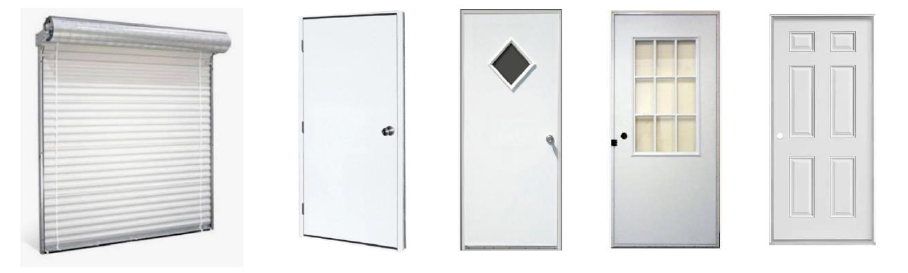
Standard optional walk-in doors measure 36″ × 80″ and are mounted in a galvanized steel frame. Available styles include solid, solid 6-panel, diamond window, and 9-lite window options. All standard walk-in doors are white and are designed to open outward.
Customer-Provided Doors
Customers may supply their own garage or walk-in doors. Customer-provided garage doors cannot be installed, but customer-provided walk-in doors can be installed for an additional labor charge paid directly to the installer.
Windows
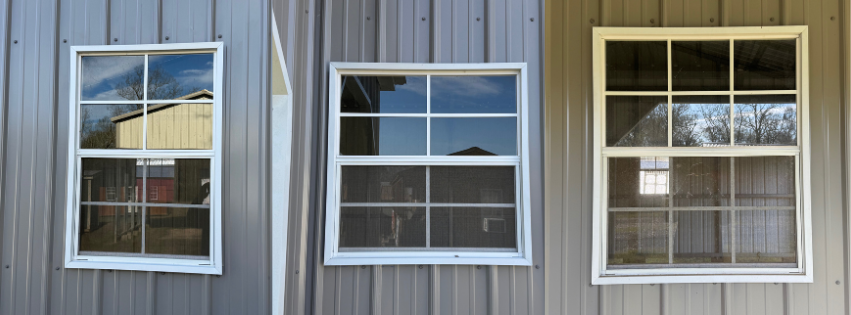
Optional Windows are available in 24″ × 36″, 30″ × 36″, and 36″ × 36″ sizes and are offered in white or black. These are single-pane, single-hung, functional windows with grid styling, framed and installed on location.
Customers may choose to provide their own windows; however, customer-provided windows must be specified at the time of order so proper frame-outs and rough opening sizes can be built. Installation of customer-provided windows is available for an additional labor charge, with pricing varying based on size.

Cupolas
Cupolas are available in 2′ × 2′ and 3′ × 3′ sizes and are constructed entirely of metal for durability and long-term performance. Offered in all available color options, cupolas provide an attractive finishing touch that enhances the overall appearance of your building while maintaining a consistent, coordinated look.

Insulation
Two insulation options are available: Reflective Double Bubble and 2″ Fiberglass. Both insulation types are wrapped in a white interior vapor barrier and must be installed during the initial building installation. Because insulation is placed between the framing and the sheet metal, it cannot be added after installation.
Insulation can be applied by individual section, allowing you to customize coverage based on your needs. For example, the roof may be insulated while the walls remain uninsulated, or insulation may be added only to specific areas of the building.
Reflective Double Bubble Insulation (R-5)
Reflective Double Bubble insulation is designed to reduce radiant heat and help control condensation. It reflects a high percentage of radiant heat and includes multiple bubble layers to protect against moisture buildup. When properly installed, it acts as a vapor barrier and helps block moisture, pests, and airborne gases. Approximate thickness is ¼ inch.
2″ Fiberglass Insulation (R-7)
2″ Fiberglass insulation offers increased thermal resistance and improved temperature control. It consists of fiberglass insulation wrapped in a vapor radiant foil barrier, which helps prevent moisture penetration and reduces the risk of condensation and mold growth. Approximate thickness is 2 inches.
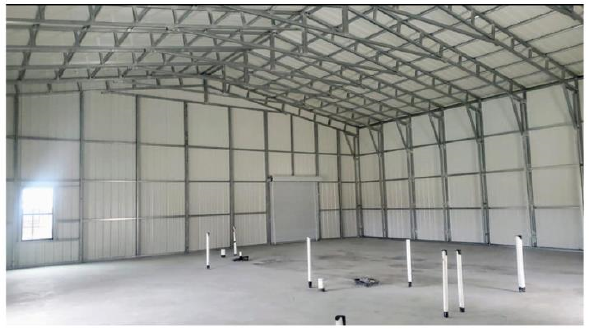
Double-Legs and Ladder-Legs
Double-Leg Construction
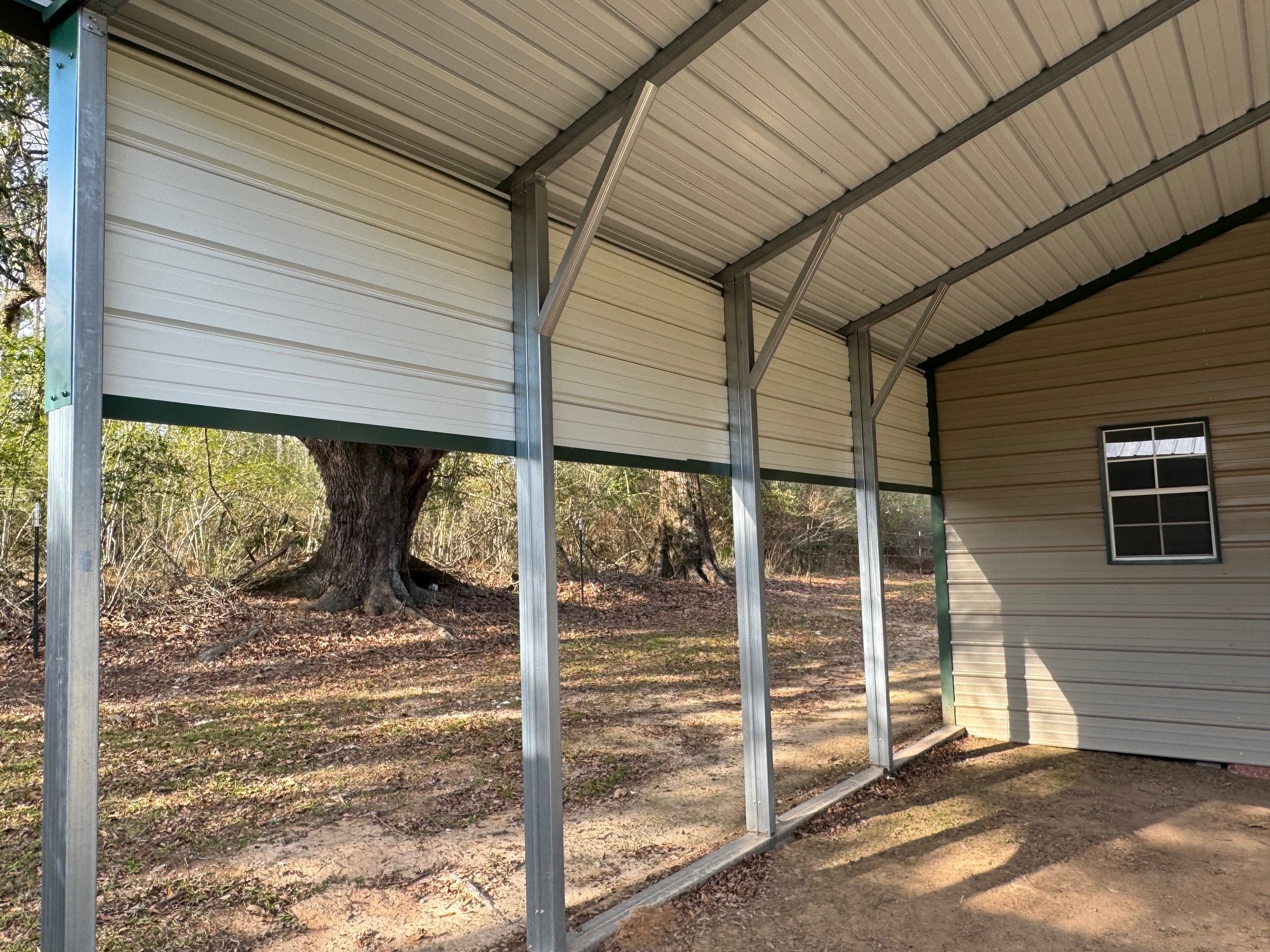
Reinforces the building by placing two sets of base rails side by side and framing the structure around them, resulting in two sets of legs per base rail. This upgrade adds strength and rigidity, providing additional roof support and helping reduce building sway. Double-leg construction is often required in coastal or high-wind areas, but it is also available as an upgrade on most building styles and sizes for customers seeking extra stability.
Ladder-Leg Construction
Uses paired legs framed and braced approximately one foot apart, creating a ladder-like structure that significantly increases strength and load capacity. Ladder legs are commonly specified for commercial or heavy-duty applications where additional structural reinforcement is needed. Like double-leg construction, ladder-leg options are available on most building styles and sizes.
Both options are designed to enhance durability and performance, allowing customers to tailor their building to environmental conditions, usage demands, and long-term expectations.
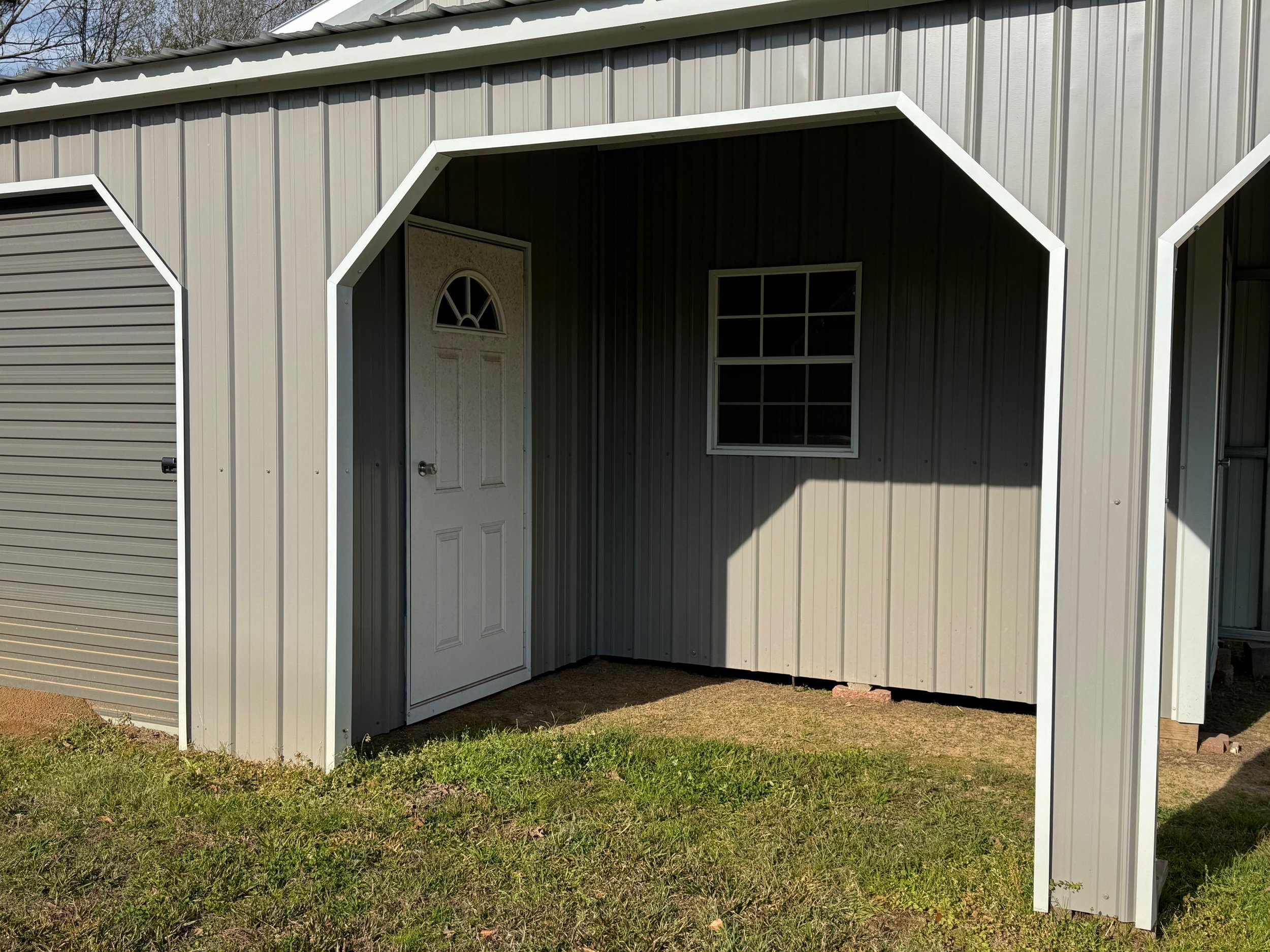
Frameouts
Frame Outs allow sections of a building or lean-to to be opened by removing base rails and legs in a specified area. This option is commonly used to create larger open spans, improve access, or prepare openings for garage doors, walk-in doors, or windows.
On lean-to structures, a frame out removes the base rail and legs in that section and adds a structural header bar. This creates an open area while maintaining support, with clearance beneath the frame out measuring approximately 1 foot less than the lean-to leg height. For customer-provided garage doors, double-leg framing is recommended to properly support traditional door installations.
Frame outs 5 feet wide or larger are cut and welded during fabrication and cannot be relocated once fabrication begins.